Service, normal and emergency power
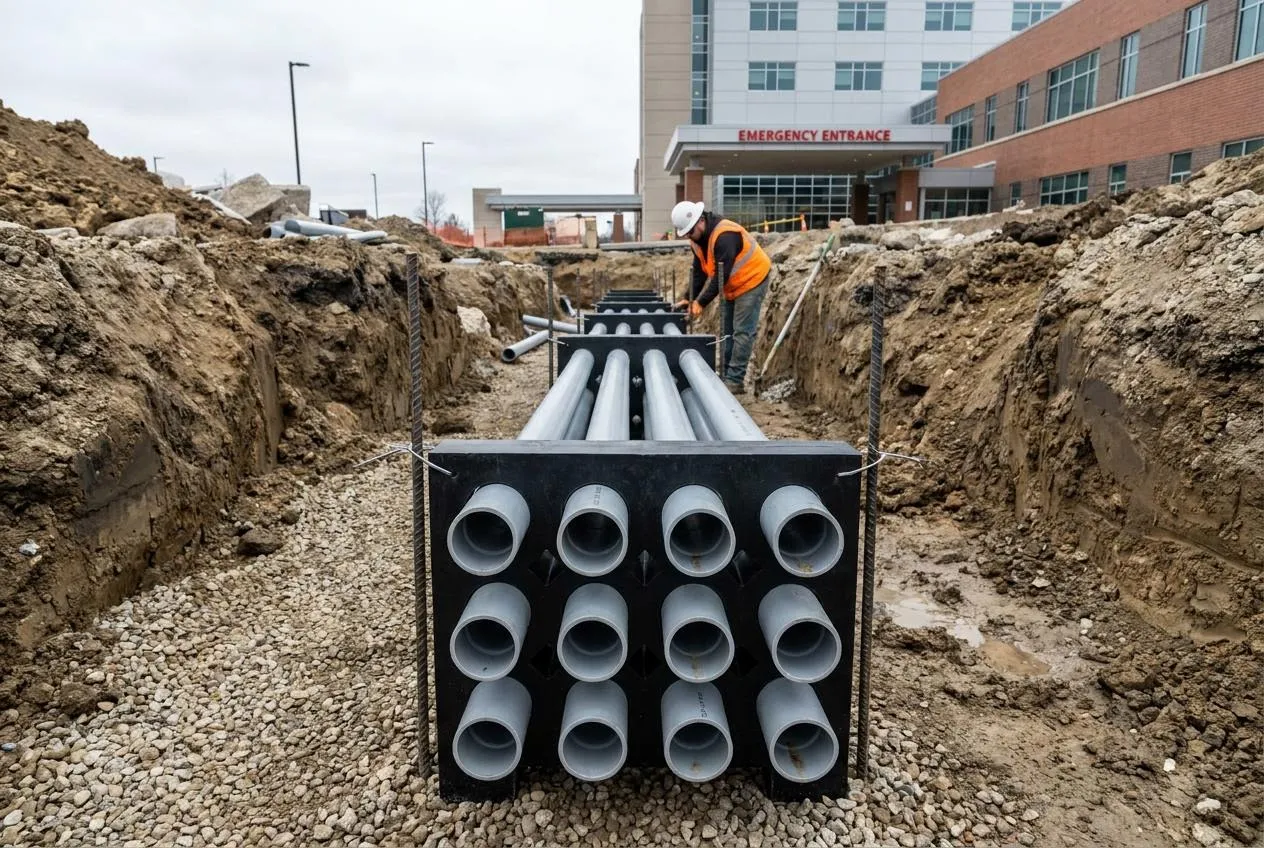
Hospital jobs run big utility service entrances plus separate normal and emergency feeders to the switchgear. Each bank gets its own spacer program, labeled so crews never mix them up in the trench.
For electrical contractors · underground work
CNC-cut HDPE spacers for hospital service entrances, generator feeds, campus loops and collection systems. Built from your duct bank detail, labeled by bank and shipped to your yard before the pour.
In the ground
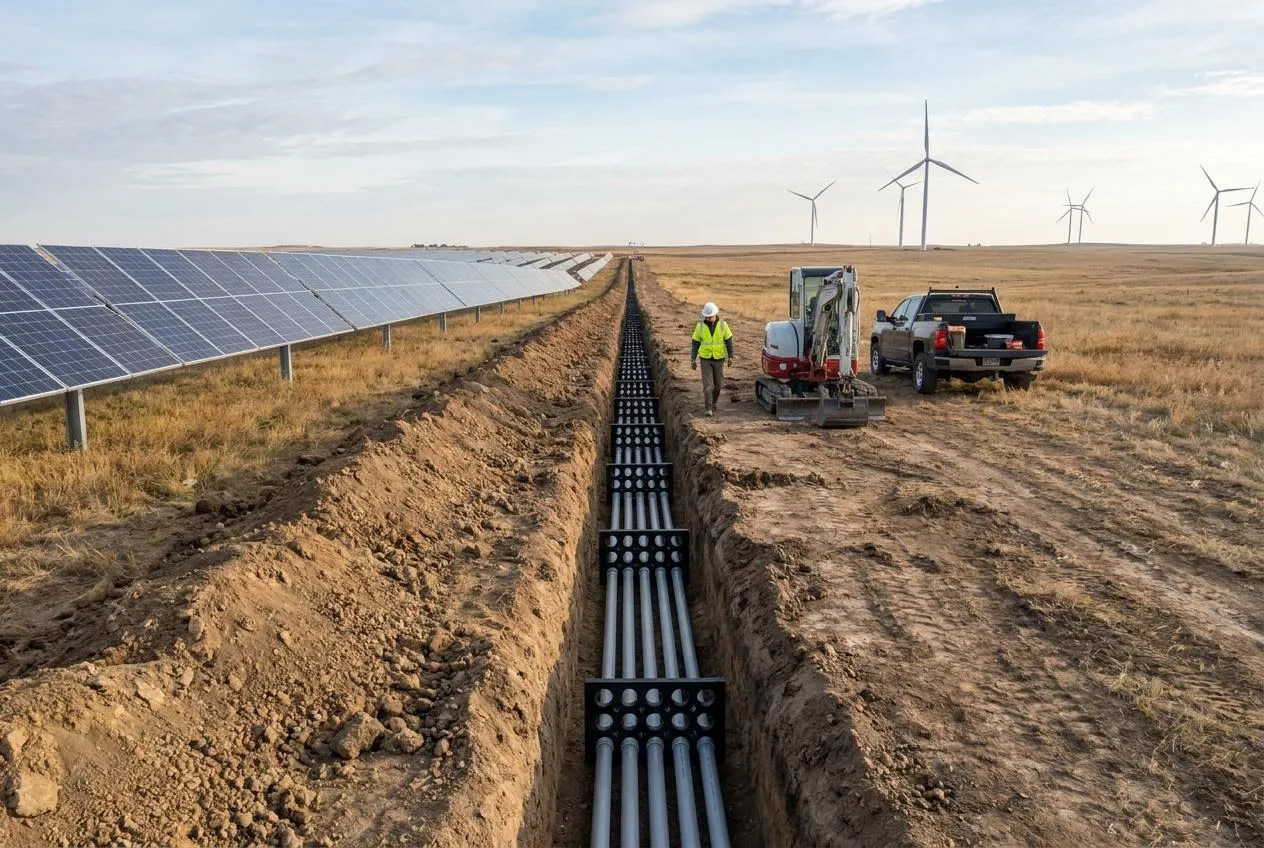
The jobs your crews already run, from the hospital service entrance to the last string of a solar field.
Hospital jobs run big utility service entrances plus separate normal and emergency feeders to the switchgear. Each bank gets its own spacer program, labeled so crews never mix them up in the trench.
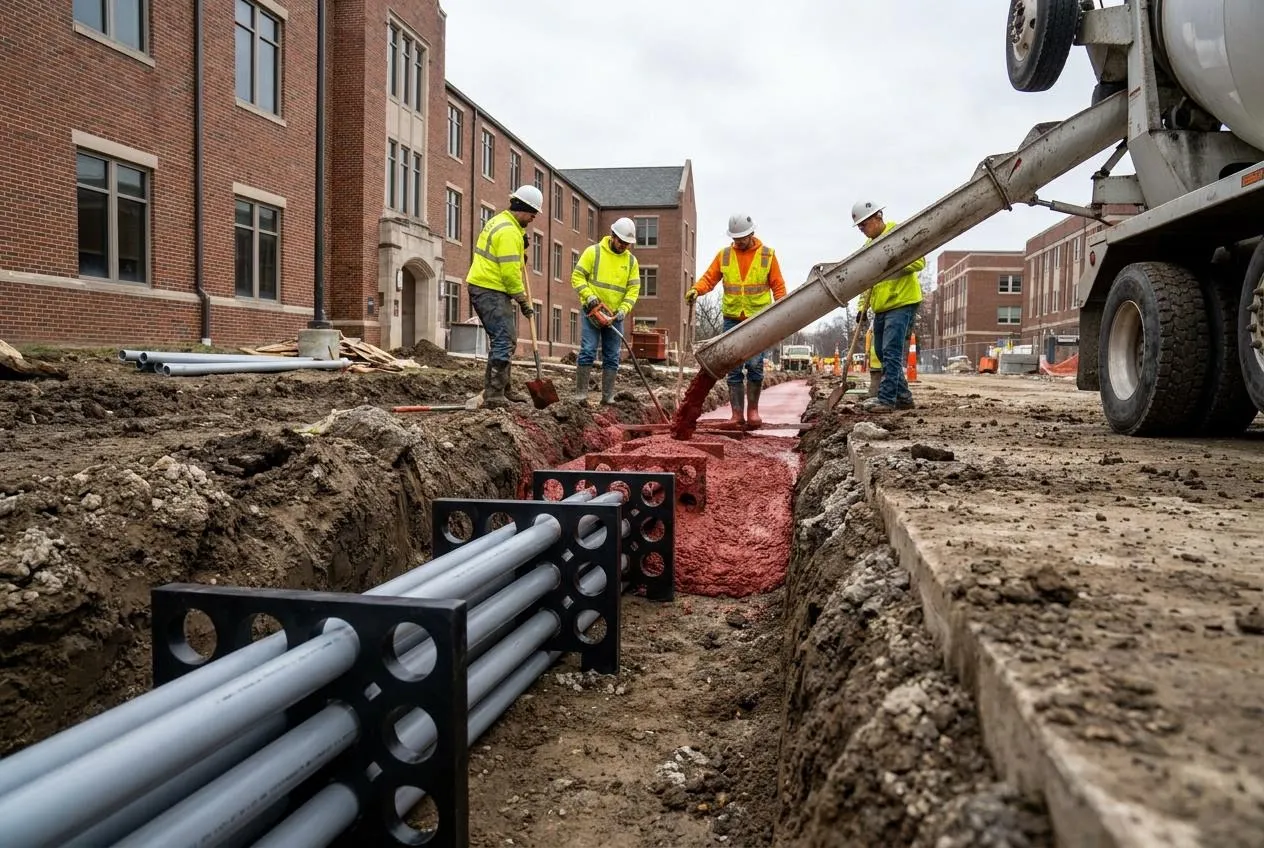
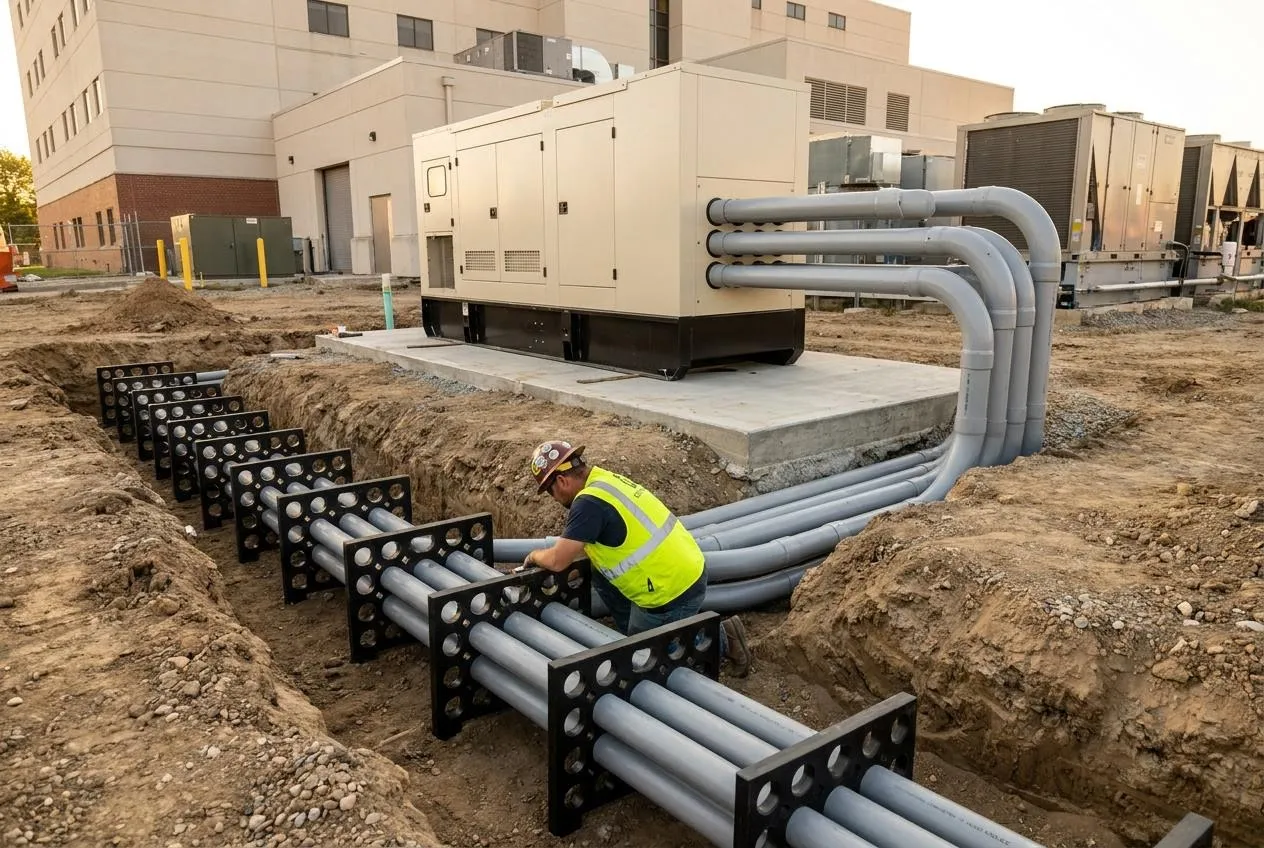
Short, heavy banks from the generator pad to the ATS and switchgear room, often with mixed conduit sizes. Base spacers hold the bank down until the sweeps are set and the bank is poured.
Universities, schools, bases and county campuses add buildings in phases. The program is saved, so the spacers for phase three match phase one.
Collection and feeder trenches run for miles. Spacers ship palletized by the thousand, cut from lower-cost reprocessed HDPE when the spec allows.
How a duct bank goes in
What we cut
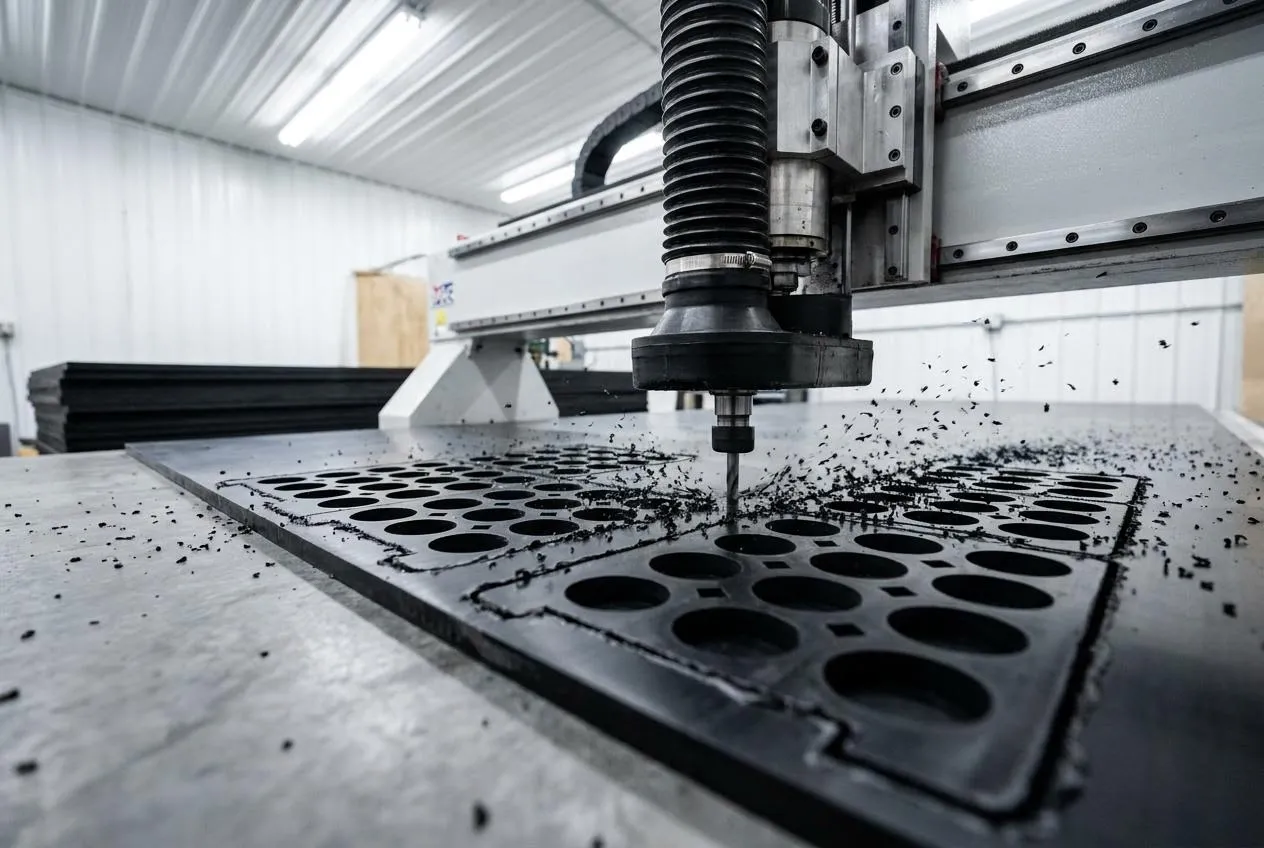
Spacers are the core of what we do. The same CNC routers cut the rest of the non-conductive plastic an electrical job needs.
Bottom-row spacers with feet that hold the bank off the trench floor so concrete gets underneath.
Duct bankStacked between rows to keep every conduit on its spacing all the way up the bank.
Duct bankThe full hole pattern in a single plate — fast to set, no assembling modules in the trench.
Duct bankSingle-conduit pieces that lock together into any layout, or stack for tall banks.
Data centerHole and slot patterns for conduit, cooling pipe and cable separation in data center builds.
TrenchPlastic warning cards and markers set above the bank to flag buried electric before anyone digs.
ElectricalNon-conductive mounting plates, standoffs and brackets cut to your equipment drawings.
Anything flatIf it starts as plastic sheet and you have a drawing, we can quote it — prototype to production.
Up close
Turn the part and tap a number to see what each feature does in the trench.
↔ Drag to turn it
Try it
Set the conduit size and pattern and see the part take shape. Hit "Quote this layout" and the details drop straight into the quote form.
Layout builder
Pick the conduit and pattern. The drawing updates as you go — then send it to us with your quote request.
How an order works
Typical spacer spec Why CNC-cut plastic
Plastic will not carry current, so the spacer adds no path to ground around energized conduit.
HDPE does not corrode, swell or break down in soil, groundwater or concrete.
Every part comes from the same CNC program, so conduit lines up spacer to spacer down the whole trench.
Cut from solid sheet — no injection mold — so a custom layout costs the same to set up as a standard one.
Crews carry and set them by hand, and they stack flat on a pallet.
Odd sizes, mixed conduit, tight vault entries — the layout follows your drawing, not a catalog.
Built for electrical contractors
Send the duct bank detail from the bid set, or export the section from your VDC/BIM or AutoCAD model. DXF, DWG and PDF all work.
Spacers packed by bank and by run, ready for your prefab shop or straight to the trench with the conduit.
Normal, emergency, service and comms banks each get their own drawing number, engraved on the part.
Ship to whichever branch yard or job site is running the work, across the Dakotas, Nebraska and beyond.
Yes. Each bank gets its own drawing number engraved on the spacer and its own labeled bundle on the pallet, so the crew can tell a normal-power spacer from an emergency-power one in the trench.
Any of these is enough to start: the project drawing or duct bank detail, a CAD file (DXF, DWG, STEP or PDF), a photo of an existing spacer with a tape measure in it, or just the conduit size, rows, conduits per row and spacing. Add the quantity and the date you need them on site.
Yes. Send a photo with measurements or ship us a sample. We draw it up, send the drawing back for your OK, and cut to that.
HDPE is the standard — it is non-conductive, will not rust or rot, and shrugs off wet concrete and soil. We also cut PVC, polypropylene and lower-cost reprocessed HDPE for big, price-sensitive runs.
Yes. Mixed hole sizes, rebar slots, tie-down points and concrete flow-through openings are all just part of the CNC program.
Every layout is saved, so phase two, three and four of a project come off the machine identical to phase one. Blanket orders with scheduled releases are welcome.
Yes. We ship palletized orders to job sites and yards across the U.S.
Pour date coming up?
Drawings, CAD files, a photo of an old spacer or just the conduit count — any of it is enough to start.